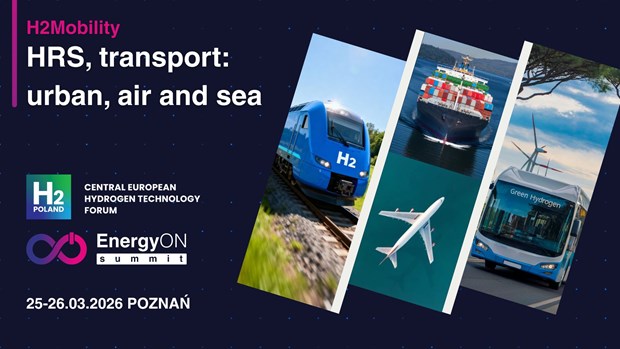
HRS, transport: urban, air and sea
Hydrogen mobility is currently developing simultaneously at the municipal and regional levels — and key decisions by local governments regarding the construction of H₂ stations affect the entire zero-emission transport ecosystem. During H2POLAND and EnergyON Summit, we will show how to create effective business models for urban fleets and how to integrate local investments into the broader AFIR and TEN-T infrastructure, supporting heavy and inter-agglomeration transport.
Panel 1: Business models for urban H₂ stations
The panel presents four different approaches taken by Polish cities to the construction and operation of hydrogen stations — from full outsourcing, through independent infrastructure, to hybrid models of purchasing hydrogen from the market. It will show how different strategies affect costs, energy independence, operational risks and the development of a zero-emission urban fleet. Participants will see which models are most effective for small, medium and large fleets and how to make investment decisions based on the real needs of local government.
Panel 2: How to combine the development of urban stations with regional and inter-agglomeration transport?
Long-distance transport, AFIR and TEN-T: H₂ network for heavy transport and interregional mobility
The panel shows how local investments in hydrogen stations can become part of the European infrastructure for heavy and long-distance transport. The impact of the EU's AFIR and TEN-T regulations, which require the construction of H₂ stations every 200 km along major transport corridors and in major urban hubs, will be discussed. Participants will learn how local governments can prepare their stations to serve not only buses and municipal vehicles, but also regional logistics, heavy transport and inter-agglomeration transport — creating local hydrogen mobility centres and increasing the profitability of investments.